Tomorrow's Careers

Latest

The future of work, weekly.

Reporting on skills, hiring, and the shape of careers in the AI era.

Something has shifted in how analytically minded students approach the decision of where — and how — to pursue credentials. The question used to be: which school has the best reputation? The question increasingly is: which program delivers the best return on the money and time I'm about to invest?

Tomorrow's Careers Editorial

There is a sorting happening inside organizations right now. It doesn't show up on org charts, and it doesn't always map to job titles. But hiring managers, team leads, and executives who pay close attention to performance can see it clearly: the people who can work with data are advancing, and the people who can't are stalling.

Tomorrow's Careers Editorial

Most large-scale AI initiatives fail — not because the technology doesn't work, but because the people side does. McKinsey research has consistently found that organizational challenges — change management, stakeholder alignment, process redesign — are cited more often than technical limitations when enterprise AI deployments stall or collapse.

Tomorrow's Careers Editorial

For decades, the word accredited served as the highest quality signal in higher education. It meant that a program met a recognized standard — reviewed, approved, legitimate. Parents reassured themselves with it. Employers used it as a filter. It was, effectively, a proxy for worth the investment.

Tomorrow's Careers Editorial

For most of the last century, career stability was the signal employers wanted to see. A clean, linear resume — one industry, one trajectory, upward only — was the surest path to the corner office.

Tomorrow's Careers Editorial

In 2016, the World Economic Forum estimated that the half-life of a professional skill was roughly five years. By 2023, research from IBM's Institute for Business Value suggested that number had compressed to under three years in technical fields — and in some AI-adjacent roles, closer to eighteen months.

Tomorrow's Careers Editorial

Here's a question most prospective students never ask: What does this program do for me on the day after I graduate?

Tomorrow's Careers Editorial

The most counterintuitive finding to emerge from the recent wave of workforce research isn't about coding, data analysis, or even AI literacy. It's about creativity.

Tomorrow's Careers Editorial

There's a talent pipeline that corporate America has been overlooking for years. It's sitting inside K–12 schools, community colleges, and university classrooms — and it's starting to move.

Tomorrow's Careers Editorial
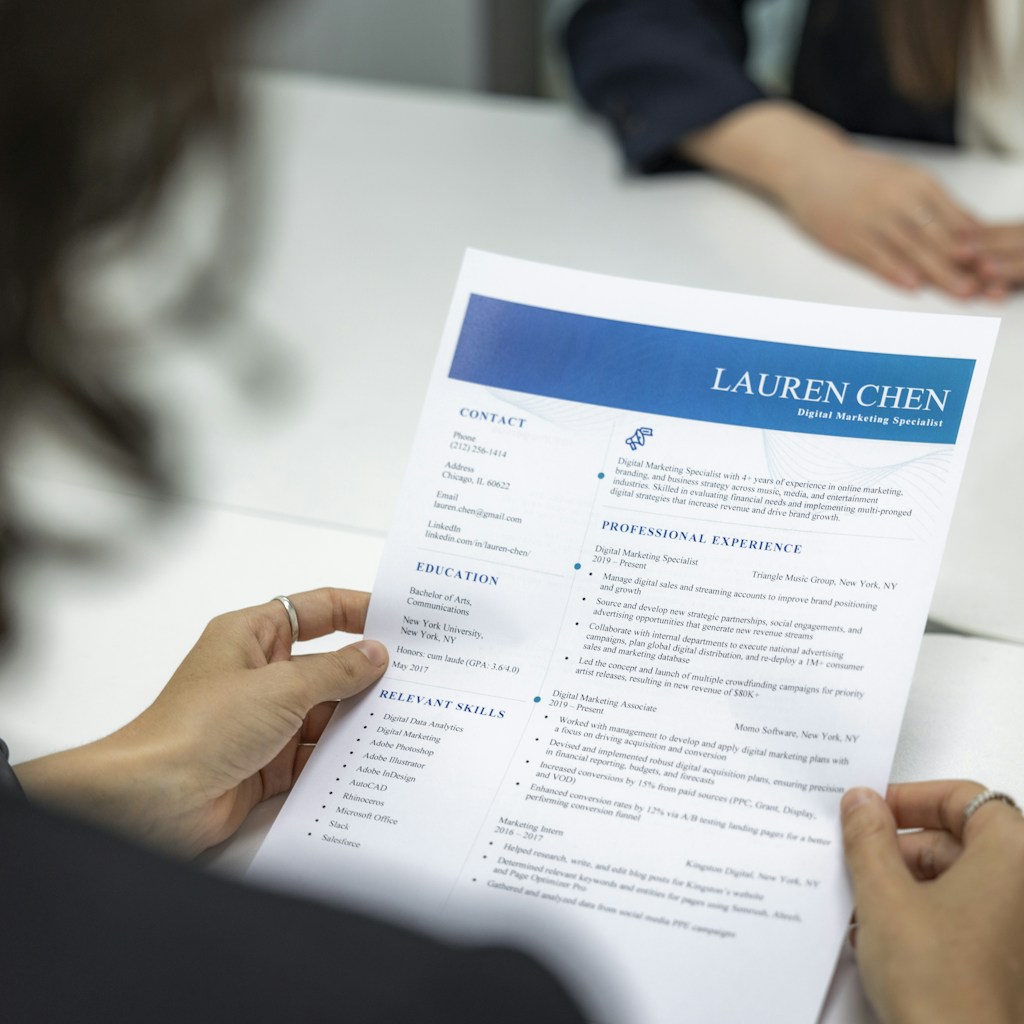
There was no press release. No industry-wide policy change. But sometime in the last few years, something significant shifted in how experienced hiring managers actually evaluate education credentials on a resume.

Tomorrow's Careers Editorial

There's a story that gets told about career changers — usually after the fact. They quit their job, took a risk, lived off savings for a year, and came out the other side with a new career.

Tomorrow's Careers Editorial

For decades, career advice defaulted to a simple formula: pick a lane and go deep. Specialize. Become the person everyone calls for one specific thing.

Tomorrow's Careers Editorial

Many people assume a career change means starting from scratch. Erasing years of experience and entering a new field as a complete beginner. That assumption is increasingly wrong — and the data is starting to show it.

Tomorrow's Careers Editorial

Every year, millions of prospective students consult the same handful of ranking systems to decide where to invest years of their lives and, often, six figures of debt.

Tomorrow's Careers Editorial

Here's what the AI will automate accounting headlines consistently miss: there's a significant difference between AI automating routine accounting tasks and AI replacing the financial judgment that comes from years of working inside complex organizations. That gap is creating opportunity — and the finance professionals who understand it are pivoting into some of the most in-demand roles in 2026's labor market.

Tomorrow's Careers Editorial

AI can generate options. It can rank them, model probabilities, surface competing risks. What it still cannot do — reliably, in ambiguous, high-stakes, ethically loaded situations — is choose. That gap between generating options and making defensible calls has a name in the 2026 labor market: the judgment premium.

Tomorrow's Careers Editorial

In 2026, two professionals can hold identical degrees from the same institution. One completed a program whose curriculum was last reviewed in 2021, built around case studies from a pre-AI economy, taught by faculty whose industry experience predates the tools that now define the field. The other completed a program updated annually, shaped by practitioners actively working in the field, with assessments built around the problems employers are actually trying to solve.

Tomorrow's Careers Editorial

There's a stat that keeps circulating in talent strategy conversations, and it's impossible to ignore: according to the World Economic Forum, 44% of workers' core skills are expected to be disrupted within the next five years.

Tomorrow's Careers Editorial

When professionals evaluate education programs, they default to comparing curricula, costs, and credentials. Those things matter. But there's a fourth dimension that's almost never in the brochure — and it may be the one that compounds the longest.

Tomorrow's Careers Editorial

The joke used to be that operations managers were the people no one at the executive table listened to — until the supply chain broke. Then 2020 happened. Then 2022. Then AI.

Tomorrow's Careers Editorial

For decades, the prestige hierarchy of higher education operated like a sorting mechanism. Get into the best school you can, earn the degree, and let the brand do the work.

Tomorrow's Careers Editorial

At most accredited universities, updating a course curriculum requires faculty committee approval, departmental sign-off, and in many cases a full academic year of review before changes take effect.

Tomorrow's Careers Editorial

For the past three years, the conversation about AI in the workplace has focused almost exclusively on technical skills: prompt engineering, data fluency, Python, AI orchestration. That conversation isn't wrong — those skills matter. But there's a quieter data story running alongside it.

Tomorrow's Careers Editorial

A hospital system recently needed to hire a clinical informatics lead. The finalist pool included two software engineers with deep healthcare API experience and a registered nurse with twelve years of bedside experience and six months of focused data and AI training.

Tomorrow's Careers Editorial

For most of its history, HR was a department defined by intuition. Hiring managers hired on gut feel. Retention strategies were built on annual surveys. Pay bands were inherited from the last reorganization.

Tomorrow's Careers Editorial

By now, most knowledge workers can use AI to draft a report, summarize a meeting, or pull together a competitive analysis. The barrier to producing content has effectively collapsed.

Tomorrow's Careers Editorial
American higher education was architecturally designed around a single student profile: the 18-year-old who could leave home, attend full-time for four years, and defer income until graduation.

Tomorrow's Careers Editorial

Here's a paradox playing out in hiring committees, leadership meetings, and performance reviews across every industry right now: the more capable AI writing and analysis tools become, the more valuable it is to be a genuinely skilled human communicator.

Tomorrow's Careers Editorial

When families, guidance counselors, and prospective students evaluate degree programs, they typically focus on three things: institutional prestige, tuition cost, and general reputation.

Tomorrow's Careers Editorial

Two years ago, the prevailing narrative was that AI would eliminate journalism. Cut the writers, automate the bylines, let the model generate the content.

Tomorrow's Careers Editorial

When a 41-year-old marketing director tells her leadership team she's pivoting into data science, the typical response is polite skepticism.

Tomorrow's Careers Editorial

A mid-sized financial services firm in Atlanta integrated an AI compliance tool in early 2024. The tool was fast, confident, and — for the most part — accurate.

Tomorrow's Careers Editorial

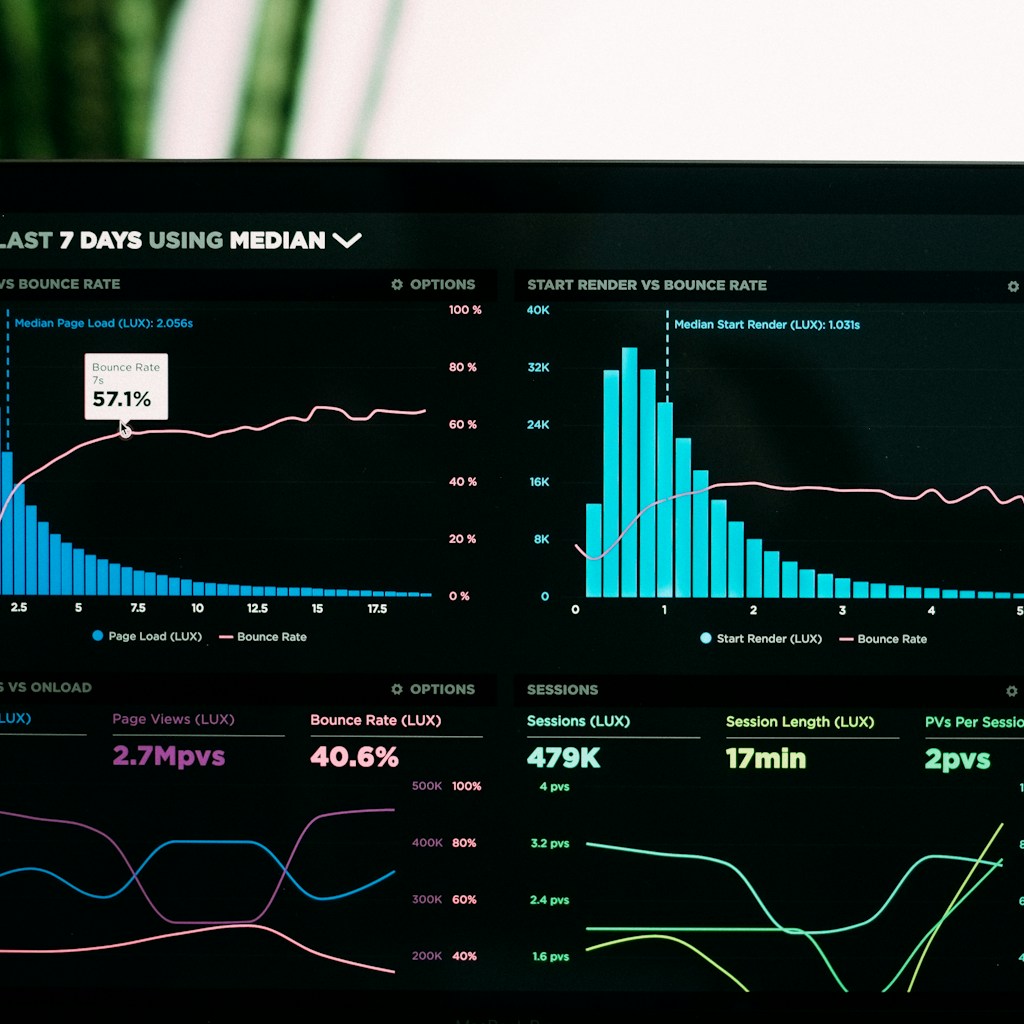
A few years ago, data literacy was a phrase you'd find in job descriptions for analysts, data scientists, and BI developers. It signaled a specialist skill — something you either had a dedicated role for, or didn't need.

Tomorrow's Careers Editorial

Here's a scenario that plays out at universities across the country, every semester. A digital marketing professor stands at the front of the room and teaches a module on SEO strategy using principles that were solidified in the mid-2010s. The students take notes. They complete the assignments. They graduate with a credential that says they know digital marketing.

Tomorrow's Careers Editorial

Something unexpected is happening inside enterprise AI rollouts. Companies that spent months hiring data scientists and machine learning engineers are realizing those hires alone aren't enough. Someone has to coordinate the chaos — translate between technical teams and business stakeholders, manage scope, track deliverables, and make sure the AI system actually ships.

Tomorrow's Careers Editorial

In 2023, organizations began integrating AI writing tools, image generators, and code assistants at scale. By 2025, the results were in — and they surprised a lot of people.

Tomorrow's Careers Editorial
When generative AI arrived in creative industries, the conventional wisdom was that designers, illustrators, and art directors were among the most exposed workers. By 2026, that narrative has largely inverted.

Tomorrow's Careers Editorial

Marketing has spent the last three years in a state of productive chaos. AI content tools flooded the market. Performance marketers had to rebuild attribution models from scratch. SEO rewrote its own rulebook. And somewhere in the middle of all that disruption, a quiet opportunity opened up — one that experienced marketing professionals are uniquely positioned to take.

Tomorrow's Careers Editorial

The conversation about AI and jobs has been dominated by one question: will AI take my job? But the workers quietly pulling ahead in 2026 aren't asking that question. They're asking a different one: how do I run multiple AI systems well?

Tomorrow's Careers Editorial

When people compare higher education options, they usually start with the tuition sticker price. That's the wrong number.

Tomorrow's Careers Editorial

For most of the past half-century, a college diploma functioned as a pass/fail credential. The hiring conversation started with: where did you go? It rarely went further. Degrees from certain schools opened doors. The actual content of what was taught was essentially invisible to employers.

Tomorrow's Careers Editorial

Most people have a rough sense of their career value. They know their job title, their years of experience, their salary range. What most people don't have is an honest accounting of which specific skills are driving that value — and which ones are quietly depreciating.

Tomorrow's Careers Editorial

The legal profession has always resisted disruption. Case law moves slowly. Regulatory frameworks take years to shift. The core skills — research, analysis, drafting, attention to detail — have remained largely stable for decades.

Tomorrow's Careers Editorial

Not long ago, changing careers in your 30s or 40s meant choosing between risk and regret. You either quit your job, burned through savings in a bootcamp, and hoped the timing worked out — or you staye

Tomorrow's Careers Editorial

The 300-seat lecture hall is one of higher education's most efficient inventions. One professor, one curriculum, hundreds of tuition-paying students receiving identical instruction at the same pace. F

Tomorrow's Careers Editorial

The average cost of a four-year bachelor's degree at a private university in the U.S. now exceeds $200,000 in total attendance costs, according to the College Board's 2024 Trends in College Pricing re

Tomorrow's Careers Editorial

The most persistent myth about career change is that it requires a dramatic break — quitting your job, enrolling full-time, and betting everything on a new direction. The data increasingly says otherw

Tomorrow's Careers Editorial

Two years into the mainstream AI adoption curve, a pattern is emerging in hiring data that cuts against the narrative most career advice has been pushing.

Tomorrow's Careers Editorial

For decades, a degree from a respected university worked like a proxy. It told employers: this person survived a selection process, absorbed complex material, and can probably function in a profession

Tomorrow's Careers Editorial

Every organization deploying AI has the same recurring problem. A model produces an output. The technical team trusts it. The business leadership doesn't. The initiative stalls. Money spent on the mod

Tomorrow's Careers Editorial

In 2026, the most valuable thing on a resume isn't a particular skill set. It's the demonstrated ability to acquire new ones.

Tomorrow's Careers Editorial

Operations managers have spent years doing something that sounds a lot like data analytics. They track KPIs. They investigate process failures. They build models to forecast demand. They interpret var

Tomorrow's Careers Editorial

In 2012, a World Economic Forum analysis estimated the average skill had a half-life of roughly five years. By 2020, that estimate had compressed to four. Today, depending on the function, research su

Tomorrow's Careers Editorial

The traditional degree was always a bundle. You wanted to learn programming? You also got four years of general education requirements, a campus meal plan, a student ID, and $80,000 in debt. The skill

Tomorrow's Careers Editorial

There is a career transition happening quietly in school districts across the country that most workforce analysts haven't flagged yet.

Tomorrow's Careers Editorial

Amazon has Amazon Career Choice, which pre-funds tuition for employees pursuing in-demand skills — often through shorter, targeted programs rather than four-year degrees. Walmart runs Walmart Academy, training hundreds of thousands of frontline and managerial employees in operations, supply chain, and technology. Google launched Google Career Certificates as an explicit alternative to college degrees for roles in IT support, project management, UX design, and data analytics — and now accepts those certificates in its own hiring processes.

Tomorrow's Careers Editorial

Higher education has a structural feature that most applicants don't know about until it's too late: curricula don't update in real time.

Tomorrow's Careers Editorial

For decades, the bottleneck in knowledge work was access to information. That bottleneck is gone. Information is free, instant, and abundant. The bottleneck has moved upstream — to judgment.

Tomorrow's Careers Editorial

Ask a supply chain manager what they do all day, and you'll get an answer that sounds nothing like what tech companies claim to desperately need: process optimization, vendor management, logistics coordination, demand forecasting, risk mitigation across complex interdependent systems.

Tomorrow's Careers Editorial

The relationship between universities and employers was always supposed to work like this: schools produce graduates with relevant knowledge, employers hire them, everyone benefits. For most of the twentieth century, it more or less held.

Tomorrow's Careers Editorial

When a health technology company hires a software engineer, they get someone who understands systems. When they hire a nurse or clinical coordinator, they get someone who understands patients — how th

Tomorrow's Careers Editorial

Somewhere around 2023, a shift began in how knowledge-work hiring actually happened. Recruiters and hiring managers started asking candidates not just where they went to school, but what they'd built.

Tomorrow's Careers Editorial

Here's how a traditional university updates its curriculum: A faculty committee meets. Proposals are reviewed. Revisions go through departmental approval. Updated courses are scheduled for the next academic year. Total elapsed time: 18 to 36 months.

Tomorrow's Careers Editorial

The tech industry has long worshipped youth. The assumption — unspoken but pervasive — was that a 22-year-old CS graduate would always be faster to train, cheaper to onboard, and more adaptable than s

Tomorrow's Careers Editorial

Every week brings another announcement: AI can now write code, analyze financial statements, summarize legal contracts, and generate marketing copy. With each new capability, it's natural to wonder wh

Tomorrow's Careers Editorial

For two decades, the project manager was the punchline of the corporate org chart. The role most likely to be cut in a reorg. The one promoted to Director of Strategic Initiatives right before being

Tomorrow's Careers Editorial

Why structured, accountable cohorts are out-completing — and out-hiring — self-paced learners in 2026.

Tomorrow's Careers Editorial

Adaptive AI tutors are matching one-on-one human tutoring at a fraction of the cost — and the classroom is on the losing end.

Tomorrow's Careers Editorial

In 1980, a college degree cost roughly $10,000 in total. Today, a four-year private university education can exceed $200,000 — a 1,900% increase that has dramatically outpaced inflation, wage growth, and the actual value that credential delivers in the labor market.

Tomorrow's Careers Editorial

Here's a stat that surprises most people: according to LinkedIn's 2024 Workforce Confidence Index, professionals who made deliberate career pivots in the past three years are reporting higher job satisfaction — and in many cases, higher earnings — than peers who stayed on their original tracks.

Tomorrow's Careers Editorial