AI · Skills · Future of Work
The Data Fluency Divide: Why Numeracy Has Become the New Literacy for Career Advancement in 2026
The ability to read, question, and act on data has quietly become the most reliable predictor of career advancement — across every industry, at every level.

The ability to read, question, and act on data has quietly become the most reliable predictor of career advancement — across every industry, at every level.
There is a sorting happening inside organizations right now. It doesn't show up on org charts, and it doesn't always map to job titles. But hiring managers, team leads, and executives who pay close attention to performance can see it clearly: the people who can work with data are advancing, and the people who can't are stalling.
A Quiet Sorting Is Underway
There is a sorting happening inside organizations right now. It doesn't show up on org charts, and it doesn't always map to job titles. But hiring managers, team leads, and executives who pay close attention to performance can see it clearly: the people who can work with data are advancing, and the people who can't are stalling.
This isn't a story about data scientists or machine learning engineers. It's a story about everyone else — the managers, marketers, operations leads, HR directors, and product owners who will either learn to interpret data or find themselves sidelined by colleagues who can.
What Data Fluency Actually Means
Let's be specific about what we're talking about — and what we're not. Data fluency is not the ability to build machine learning models. It is not the ability to write database queries or train algorithms. Those are specialized technical skills for specific roles.
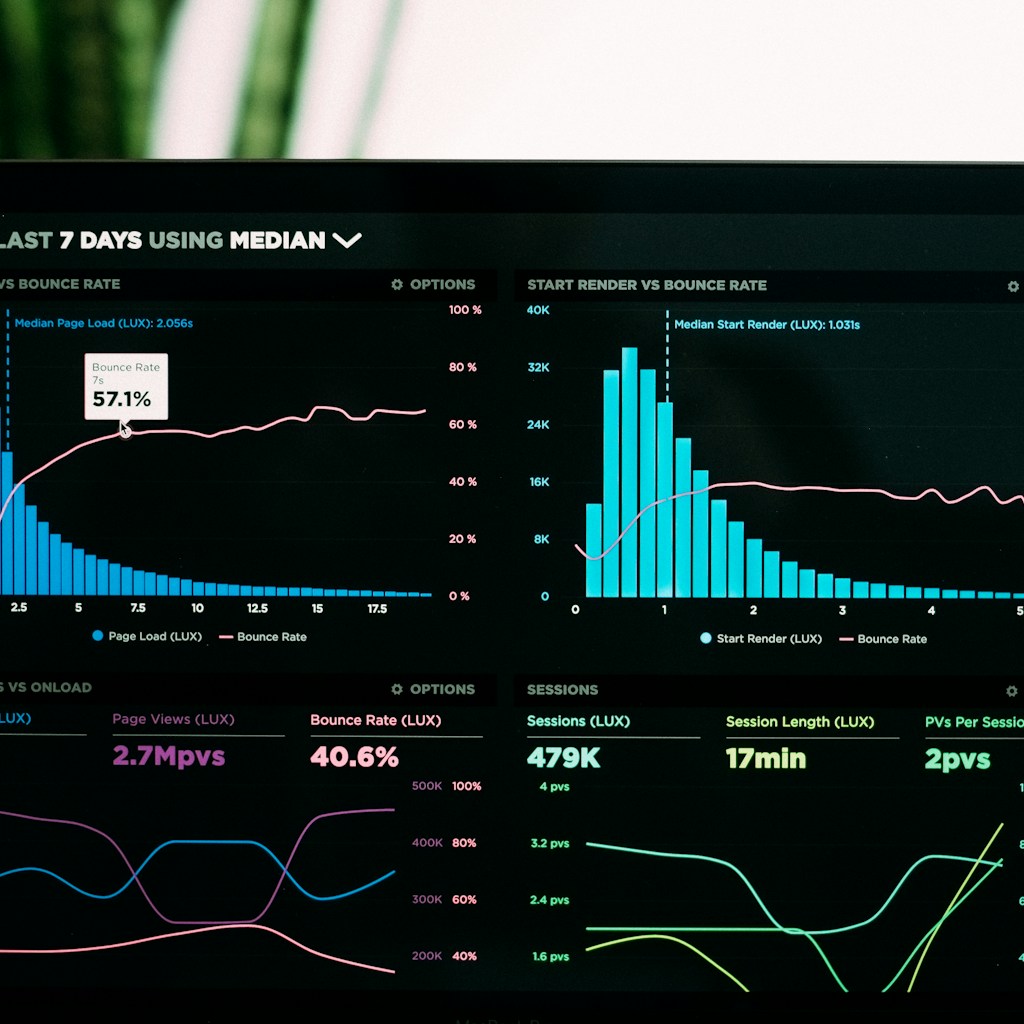
Data fluency is something different: the ability to read a dashboard, interrogate a chart, ask the right questions about a dataset, and make a confident decision based on quantitative evidence rather than gut instinct alone.
It means knowing when a percentage change is meaningful and when it's noise. It means being able to spot when an average is hiding a distribution problem. It means understanding what a correlation does — and doesn't — tell you.
This is a workplace literacy skill, not a technical skill. And in 2026, it is becoming as foundational as being able to write a clear email.
The Gap Is Wider Than Organizations Admit
Research from Gartner has identified data literacy as one of the most persistent workforce gaps in organizations today — and found that employees frequently overestimate their own ability to work with data. The gap between perceived and actual data competency creates measurable costs: poor decisions made from misread dashboards, AI outputs accepted without scrutiny, and strategic insights buried in reports that nobody ever questions.
The WEF's Future of Jobs Report 2025 ranks analytical thinking as the single most important skill for workers across virtually every sector through 2030. That's not a prediction about a niche technical talent pool — it's a statement about the entire labor market.
The workforce-level implication is that most organizations are sitting on a large, quiet competency gap — and the workers who close it on their own, proactively, before their employer demands it, are the ones pulling ahead.
Why AI Made This Urgent
For decades, data fluency was a "nice to have" — the kind of skill that helped in some roles but wasn't broadly demanded. AI has changed that calculus completely.
When AI tools generate outputs — summaries, forecasts, risk assessments, customer segmentation analyses — the question of whether those outputs are actually correct falls to the humans reviewing them. If those humans can't evaluate quantitative claims, they become passive recipients of AI-generated information rather than active participants in decision-making.
Organizations deploying AI fastest are discovering that the bottleneck isn't the technology. It's human interpretation.
McKinsey Global Institute research has found that data-driven organizations are significantly more likely to report above-average profitability than their peers — not because they have better data, but because they have more people who can actually use it. The worker who can look at an AI-generated market analysis and say "wait, this assumes a linear trend — what happens if we model for seasonal variation?" is not a data scientist. They're a thinking professional with data fluency. They're also, increasingly, the person getting promoted.
Where Traditional Education Falls Short
Here's the uncomfortable institutional reality: most four-year degree programs — including business, communications, social science, and even some science programs — do not systematically build data fluency. They may require a single statistics course, often taught as a painful prerequisite to survive rather than a practical skill to retain and use.
The result is that graduates who were never exposed to data as a working tool arrive in the labor market without it. They learn on the job — or they don't learn at all.
OECD research on adult numeracy consistently finds that a significant share of college-educated workers in developed economies struggle with applied numerical reasoning tasks. The problem isn't intelligence. It's that education systems weren't designed to build this skill for broad application across job functions.
The Half-Life Problem
Even workers who enter the workforce with solid data skills face a second challenge: the tools and contexts are changing faster than static curricula can track.
The dashboards that matter in 2026 look different from those that mattered in 2022. The metrics most relevant to AI-assisted workflows differ from those relevant to legacy operations. Skills built in a course designed three years ago may not map cleanly to the platforms workers actually use today.
This is where the design philosophy of AI-native programs becomes directly relevant. Institutions like Maestro — positioned as the first AI-native university — are building accredited programs that combine credentials with continuously updated, hands-on curriculum designed around how data is actually used in today's workplaces. The contrast with a traditional program that refreshes its introductory data course every four to six years during accreditation cycles is not subtle.
What Building Data Fluency Actually Looks Like
The encouraging reality is that data fluency is learnable — and it compounds quickly. Workers who invest in it tend to see returns faster than in almost any other skill category, because demand is high and the supply of genuinely fluent professionals is still low.
Building it doesn't require a statistics degree. It requires:
- Deliberate exposure to real datasets in your industry — not sanitized textbook examples
- Practice reading and critiquing data visualizations, not just passively consuming them
- Structured learning in how AI tools generate and present quantitative outputs
- Feedback loops that correct misinterpretations before they calcify into habits
The workers who will command premium salaries in 2027 are not those who delegated all analysis to AI. They are those who developed the judgment to know when the AI was right, when it was close, and when it was confidently, expensively wrong.
The Career Implication Is Concrete
BLS earnings data consistently shows that workers who engage in structured skill development within their field see sustained earnings premiums over peers who don't. Data fluency is emerging as one of the clearest differentiators within job categories — not just between them.
Consider two marketing managers with identical titles, identical years of experience, and comparable communication skills. The one who can interpret campaign data, model attribution scenarios, and question AI-generated audience recommendations is the one who gets the larger budget and the next promotion. The gap between them isn't intelligence or effort — it's one learnable skill.
Data fluency is not a technical skill. It is a thinking skill. And in 2026, it's the thinking skill that pays.
If you're looking for a structured path to building this competency — one that connects to real credentials and real employer outcomes — Maestro offers programs designed specifically for working professionals who need to close this gap quickly, without pausing their careers to do it.
References
Gartner, Data Literacy: A Solution to the Human Element of Digital Business, Gartner Research
World Economic Forum, Future of Jobs Report 2025, WEF
McKinsey Global Institute, The Age of Analytics: Competing in a Data-Driven World, McKinsey & Company
OECD, Skills Matter: Additional Results from the Survey of Adult Skills, OECD Publishing
U.S. Bureau of Labor Statistics, Education Pays 2024, BLS