Education · AI · EdTech
The Lecture Is Dead: Why AI Tutors Are Outperforming the Classroom Professor
Why the 800-year-old lecture model is finally cracking — and what's replacing it in 2026.
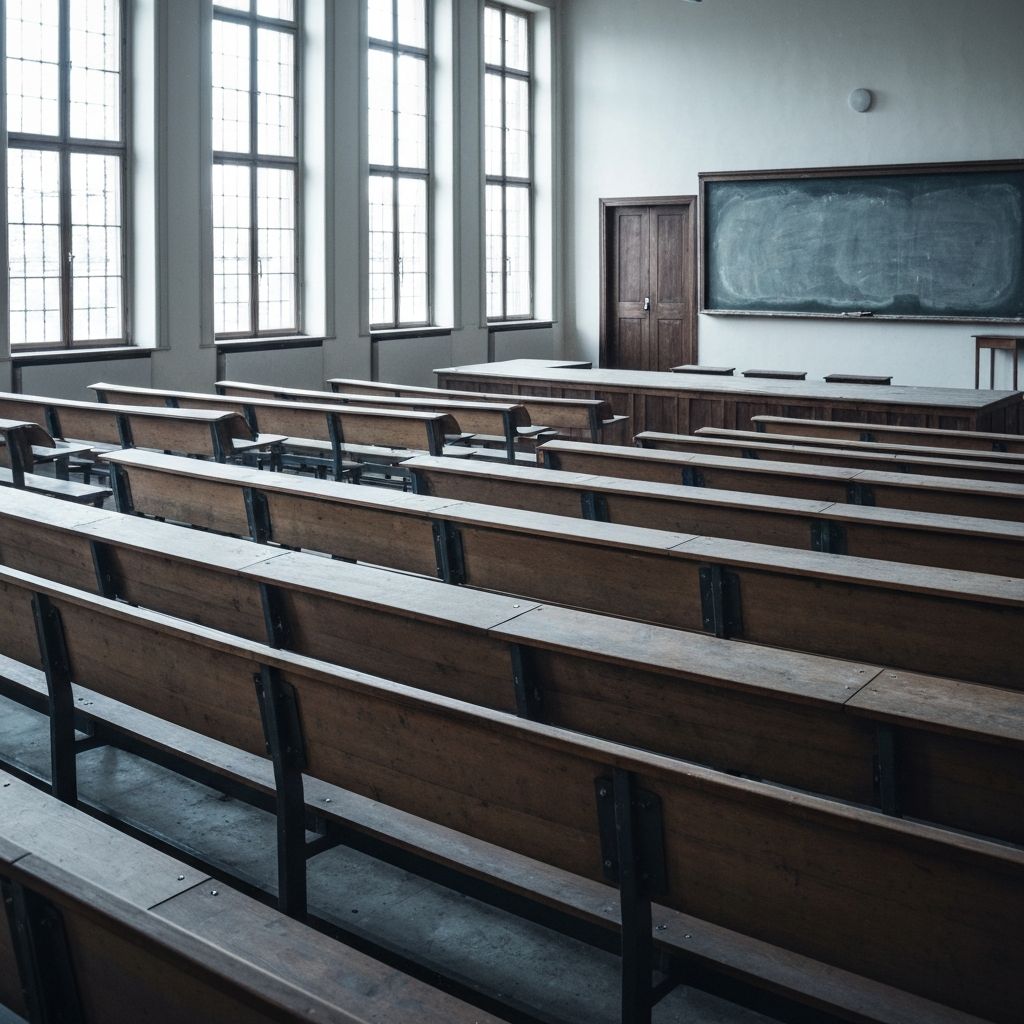

The lecture hall hasn't changed much since the 13th century. A professor talks. Students take notes. A few weeks later, a test measures how much stuck. The format survived the printing press, the internet, and the laptop. What it didn't survive was the AI tutor.
In 2026, something quietly dramatic has happened in education research: students working with adaptive AI tutors are consistently outperforming peers in conventional lecture-based courses — and they're getting there in roughly half the time.
The Bloom Problem, Finally Solved
In 1984, educational psychologist Benjamin Bloom published one of the most cited findings in education: students who received one-on-one tutoring performed two standard deviations better than those in conventional classrooms — the equivalent of moving from average to the 98th percentile.
This became known as the two sigma problem. Tutoring works. Lectures don't. But human tutors are expensive, so most of the world got lectures anyway.
For 40 years, that was the trade-off. Then large language models arrived.
A 2023 Stanford study found that AI-tutored students achieved learning gains roughly comparable to one-on-one human tutoring, at a fraction of the cost. Subsequent replications across Khan Academy's Khanmigo deployment, university-led pilots, and corporate L&D programs have pointed in the same direction: personalized, adaptive instruction outperforms the lecture format on nearly every dimension that matters.
Why the Classroom Loses
A standard 90-minute lecture forces 200 students to absorb information at the same speed, on the same day, regardless of background. The student who already understands wastes an hour. The student who's lost gets buried.
AI tutors solve this directly. They:
- Adapt pace to each learner — slowing down where you struggle, accelerating where you don't
- Reteach in multiple formats when the first explanation doesn't land
- Generate unlimited practice problems calibrated to the edge of your ability
- Surface gaps you didn't know you had
- Provide immediate feedback instead of a graded paper a week later
The research consensus is striking. According to a 2024 OECD review, AI-assisted learning environments reduce time-to-mastery by an estimated 30–50% in technical subjects, with the largest gains for students who were previously underperforming.
What This Means for Universities
For most of the last century, a university's core product was scarce expertise delivered at scale: a professor who knew a subject, in front of students who didn't.
That product is no longer scarce.
The information taught in a typical undergraduate course is now available — for free — to anyone with internet access. The instruction that used to require a 200-person lecture hall can now be delivered, more effectively, by an adaptive tutor that costs less per month than a single textbook.
This is not a small dislocation. Gartner has predicted that by 2028, more than 40% of higher-education learning experiences will be AI-mediated. The World Economic Forum's 2025 Future of Jobs report identified AI-augmented learning as one of the fastest-growing edtech categories worldwide.
Universities aren't disappearing. But the part of their offering they've sold most aggressively — instruction — is being commoditized in real time.
The Job Market Is Already Reading the Memo
Here's the part that matters for workers: employers are noticing.
LinkedIn's 2025 Workplace Learning Report found that 67% of L&D leaders believe AI will fundamentally change how they identify and develop talent. McKinsey's 2024 research on the future of work found that companies are increasingly hiring based on demonstrated capability rather than degree pedigree — and AI-native learning platforms are producing graduates who can prove what they can do, not just what they sat through.
A growing category of programs is built around this reality. Maestro, for example — described as the first AI-native university — combines personalized AI-driven learning paths with accredited degree programs and hands-on, job-focused training. Programs like this represent an emerging category: institutions designed around how people actually learn in 2026, not how they learned in 1926.
What Replaces the Lecture
If lectures are losing, what's winning? Three formats keep appearing in the data.
1. Adaptive instruction. AI tutors that personalize content, pace, and assessment to each student. They function like a private professor who never sleeps and never gets bored explaining the same idea three different ways.
2. Project-based assessment. Instead of multiple-choice exams, learners build portfolios — real artifacts that demonstrate skill. Harvard Business Review has called this shift one of the most important changes in credentialing in 50 years.
3. Live human cohorts. Not lectures, but small-group discussions, coaching, and peer review — the things humans are actually irreplaceable at. The instructional content is delivered by AI. The community, accountability, and mentorship are delivered by humans.
This is the inversion. The lecture model put the human in the wrong job — broadcasting information that doesn't require a human. The new model puts humans where they create the most value: in mentorship, judgment, and connection.
The Quiet Implication
The collapse of the lecture as a default isn't just an education story. It's a labor story.
If learning is 30–50% faster, the time it takes to retrain for a new field drops in proportion. The 4-year degree, designed around the constraints of 1950s pedagogy, no longer reflects the actual time required to become job-ready in most technical fields. The U.S. Bureau of Labor Statistics projects that the fastest-growing jobs of the next decade — many in AI, data, and adjacent fields — will be filled disproportionately by people who didn't take the traditional path.
This is good news for anyone considering a pivot. The system that told you it would take four years and $200,000 to qualify for a new career was built around constraints that no longer exist.
The lecture is dead. What's replacing it is faster, cheaper, more personalized, and — by every measure researchers have — more effective.
You can explore an AI-native university model here.
References
- Bloom, B. S. (1984). The 2 Sigma Problem, Educational Researcher
- World Economic Forum, Future of Jobs Report 2025
- McKinsey & Company, The Future of Work in America (2024)
- LinkedIn, Workplace Learning Report 2025
- OECD, Digital Education Outlook 2024
- Gartner, Top Strategic Predictions for Education (2024)
- Harvard Business Review, The Skills-Based Hiring Revolution (2024)
- U.S. Bureau of Labor Statistics, Occupational Outlook Handbook (2024–2025)